
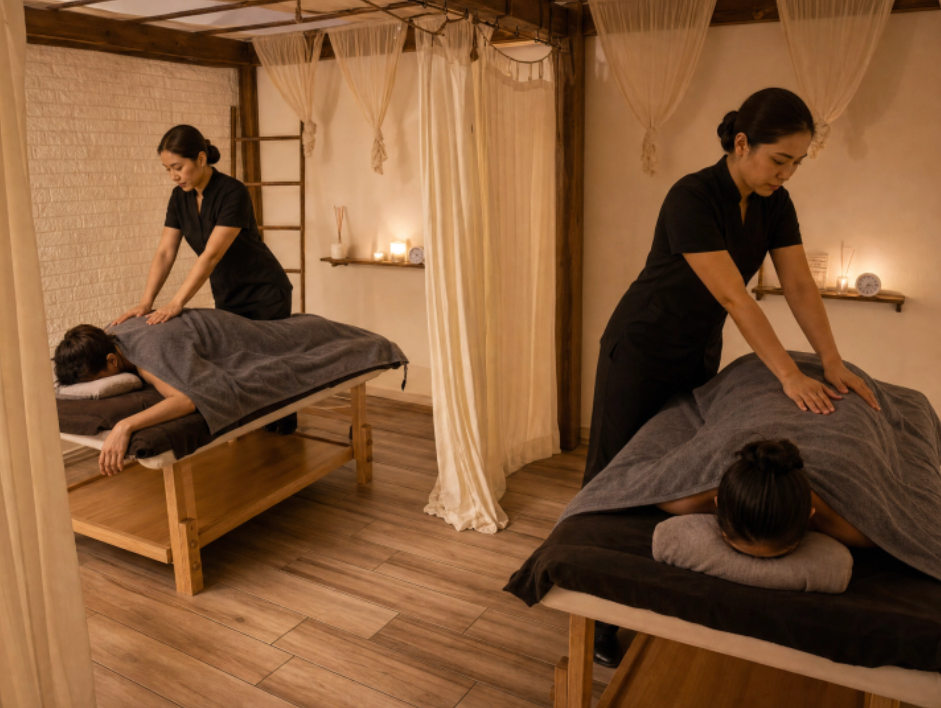
Ask what a study actually examined
The term massage covers many techniques. A research review about massage in general cannot prove that one pressure style, one spa ritual or one professional will produce the same result for you. Our deep-tissue guide therefore describes ten possible reasons to consider a visit, including preference and comfort, rather than ten medically proven effects.
The U.S. National Center for Complementary and Integrative Health says evidence for massage in low-back pain is weak. Its overview notes that studies have not established whether one type of massage is more effective than another for that condition. This is not evidence that a named appointment at The Moment treats a medical diagnosis.
Look at the comparison and time horizon
A 2015 Cochrane low-back review reported some short-term differences, but rated the evidence low to very low certainty. A 2024 Cochrane review of persistent neck pain found little to no difference from sham massage at around twelve weeks on several outcomes. Those are different research questions, not a verdict about how an individual guest will feel after a visit.
When a spa article says ‘may help’, check whether it means an observed short-term average, a subjective sense of relaxation, or a demonstrated health outcome. Those should not be treated as interchangeable. We do not promise permanent mobility changes, relief from chronic pain or a substitute for healthcare.
Keep safety part of the decision
Massage can cause soreness, and stronger pressure is not necessarily better. Tell your professional when a technique is uncomfortable, and ask for a lighter approach or stop. Discuss an existing health concern, new or unexplained pain, clotting risk, recent injury or surgery with a clinician before booking firmer work. Do not postpone medical care to try a spa treatment.
Check the sources
These sources support the specific facts discussed above; a booking profile is not independent research or a guarantee of treatment outcomes.